Next.js Performance Optimization: A Complete Guide
Learn how to optimize your Next.js application for maximum speed, 100/100 Lighthouse scores, and seamless Core Web Vitals using advanced rendering strategies, resource caching, and bundle optimization.
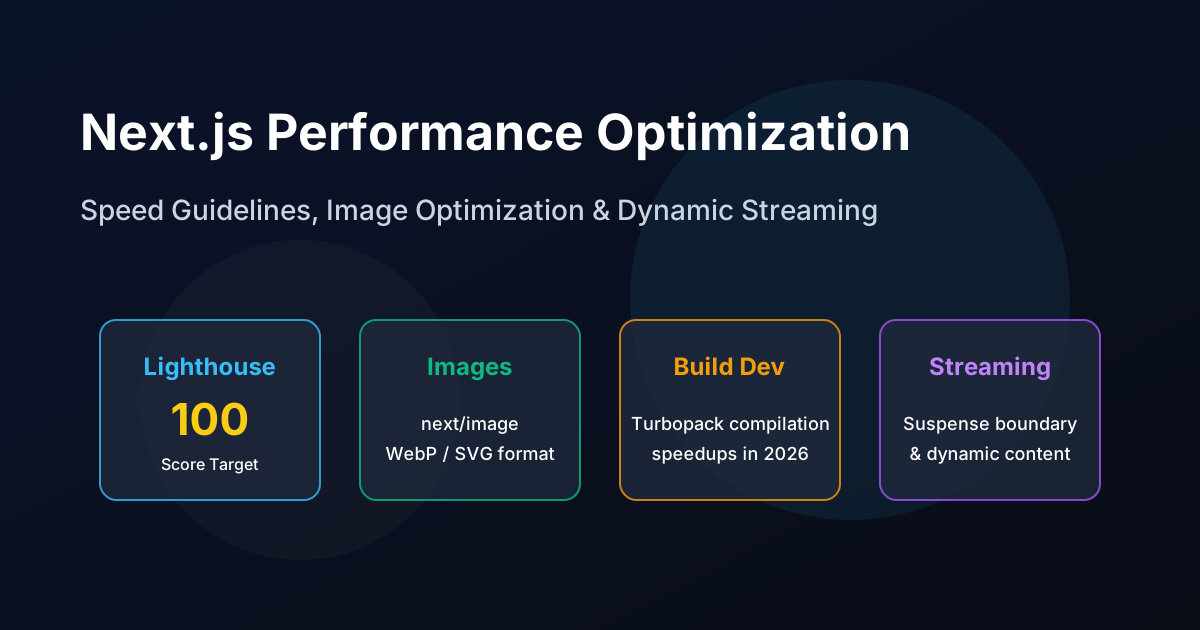
Next.js Performance Optimization: A Complete Guide
Performance is not just a feature; it is a critical component of user experience and search engine visibility. If your website takes longer than 2.5 seconds to load, search engines like Google will penalize your rankings, and users will bounce. Core Web Vitals—specifically Largest Contentful Paint (LCP), Interaction to Next Paint (INP), and Cumulative Layout Shift (CLS)—have become standard ranking signals.
Next.js provides a robust, zero-config baseline for performance. However, as applications scale and grow in complexity, developers often introduce custom modules, third-party libraries, dynamic scripts, and heavy database queries that slow down page loads.
In this comprehensive guide, we will explore advanced strategies and actionable techniques to optimize your Next.js App Router applications to achieve perfect 100/100 Lighthouse scores.
1. Master Next.js Rendering Strategies
The choice of rendering strategy is the single most important architectural decision you can make for performance. Next.js offers three core rendering methods:
Static Site Generation (SSG) / Static Exports
Static Site Generation is the most performant rendering strategy. Pages are compiled into static HTML files during the build phase. When a user requests the page, the server serves the cached HTML instantly. This results in an incredibly low Time to First Byte (TTFB).
- When to use: Blogs, marketing pages, sitemaps, documentation, landing pages.
- How to implement: Ensure you don't use dynamic API endpoints inside your components, and declare static dynamic parameters using
generateStaticParams().
Incremental Static Regeneration (ISR)
ISR allows you to update static pages in the background without rebuilds. You can specify a revalidation interval, and Next.js will serve the cached version while regenerating the page asynchronously in the background.
- When to use: Product directories, dynamic listing grids, content feeds.
- How to implement:
export const revalidate = 3600; // Revalidate every hour
Server-Side Rendering (SSR)
SSR fetches data and renders pages on every single request. While it keeps content perfectly fresh, it adds server rendering delay to the request lifecycle, which increases TTFB.
- When to use: User dashboards, account profile settings, real-time checkout carts.
- Optimization tip: Cache upstream API databases or cache the generated HTML at the CDN edge using cache headers.
2. Optimize Resource Loading
Next.js provides custom wrapper components designed to optimize asset loading automatically. Using standard HTML tags instead of these optimized components can lead to huge performance losses.
Next.js Image Component (next/image)
The default HTML <img> tag loads full-resolution assets regardless of viewport size, causing slow load times and Cumulative Layout Shift.
The Next.js <Image> component automatically:
- Resizes and Compresses: Converts images to modern formats like WebP or AVIF and outputs size variants optimized for different viewports.
- Lazy Loads: Prevents loading off-screen images until they approach the viewport.
- Eliminates Layout Shift: Forces developers to specify dimensions or use a placeholder background, ensuring page layout elements do not shift as images load.
Example usage:
import Image from 'next/image';

export default function CoverImage() {
  return (
    <div className="relative aspect-video w-full">
      <Image
        src="/assets/hero-banner.png"
        alt="Performance Guide Cover"
        fill
        sizes="(max-w-780px) 100vw, 50vw"
        priority // Add to above-the-fold images to load them instantly
        className="object-cover"
      />
    </div>
  );
}
Next.js Script Component (next/script)
Third-party analytics, support chat widgets, and marketing trackers are major contributors to slow page performance.
The <Script> component lets you schedule when scripts load:
strategy="beforeInteractive": For critical scripts like cookie consent engines.strategy="afterInteractive": (Default) For tracking pixels and tag managers.strategy="lazyOnload": For chat widgets and support systems that can wait until the page is fully usable.
3. Reduce Bundle Size and Code Splitting
Large JavaScript bundles block the browser's main thread and delay Interaction to Next Paint (INP). Keep your bundles clean and slim using these strategies:
Dynamic Imports (Lazy Loading Components)
If you have large interactive components that aren't visible immediately (e.g., popup modals, interactive charts, complex forms), load them dynamically only when they are needed.
import dynamic from 'next/dynamic';

const DynamicChartComponent = dynamic(() => import('@/components/analytics-chart'), {
  loading: () => <p className="animate-pulse">Loading Chart...</p>,
  ssr: false, // Prevents server-side rendering for client-only libraries
});
Analyze Bundle Sizes
Use the @next/bundle-analyzer tool to visualize which dependencies are taking up the most space in your production bundle.
To configure:
- Install:
npm install @next/bundle-analyzer - Add to
next.config.ts:
const withBundleAnalyzer = require('@next/bundle-analyzer')({
  enabled: process.env.ANALYZE === 'true',
});
module.exports = withBundleAnalyzer({});
- Run
ANALYZE=true npm run buildto inspect output.
4. Optimize Core Web Vitals Checklist
To ensure your application scores 100/100, enforce these Core Web Vitals checkmarks:
Largest Contentful Paint (LCP)
LCP measures when the largest visual block on the screen is rendered.
- Fix: Add
priorityattributes to your main hero images. - Fix: Minimize render-blocking CSS and pre-load critical assets.
- Fix: Use static generation (SSG) to keep server response time under 200ms.
Cumulative Layout Shift (CLS)
CLS measures how much elements shift as they load.
- Fix: Always declare explicit width and height dimensions for images and media frames.
- Fix: Set minimum heights (
min-h-*) for dynamic layout components (e.g., ad placements, skeleton lists) to reserve space while data fetches. - Fix: Utilize local variable system fonts or Next.js
next/fontto prevent flash of unstyled text (FOUT).
Interaction to Next Paint (INP)
INP tracks user input responsiveness (e.g., button clicks, form typing).
- Fix: Yield processing power back to the browser using
requestIdleCallbackor setTimeout. - Fix: Avoid running heavy calculations directly on the client thread; move computational overhead to server actions or Web Workers.
- Fix: Optimize React state triggers to avoid cascading component re-renders.
Conclusion
Optimizing Next.js for maximum performance is an ongoing process of monitoring and testing. By implementing modern rendering patterns, leveraging built-in Next.js optimization modules, keeping JavaScript dependencies lean, and aligning your workflow with Core Web Vitals metrics, you can build super fast web applications.
A high-performance site keeps visitors engaged, increases conversion metrics, and secures high organic placements on search engines, making performance tuning one of the most profitable investments for your business platform.
Building enterprise SaaS for Indian businesses from Hyderabad.
LinkedIn