Interstate vs Intrastate Supply Under GST: Complete Guide with Examples, Tax Rules & Compliance (2026)
Learn the difference between interstate and intrastate supply under GST with practical examples, place of supply rules, IGST, CGST, SGST applicability, compliance requirements, Input Tax Credit implications, and common mistakes businesses should avoid.
Interstate vs Intrastate Supply Under GST: Complete Guide with Examples, Tax Rules & Compliance (2026)
Every GST-registered business in India must determine whether a transaction is an interstate supply or an intrastate supply before issuing an invoice. This classification is one of the most important aspects of GST compliance because it determines whether IGST or CGST and SGST will be charged.
A single mistake in classification can lead to incorrect tax collection, Input Tax Credit (ITC) complications, compliance notices, penalties, and accounting errors.
Whether you are a retailer, manufacturer, freelancer, consultant, startup founder, service provider, or e-commerce seller, understanding the distinction between interstate and intrastate supplies is essential for accurate GST compliance.
In this comprehensive guide, we explain interstate and intrastate supplies, applicable tax rules, place of supply provisions, practical examples, GST calculations, compliance requirements, and common mistakes businesses should avoid.
Quick Answer
Under GST:
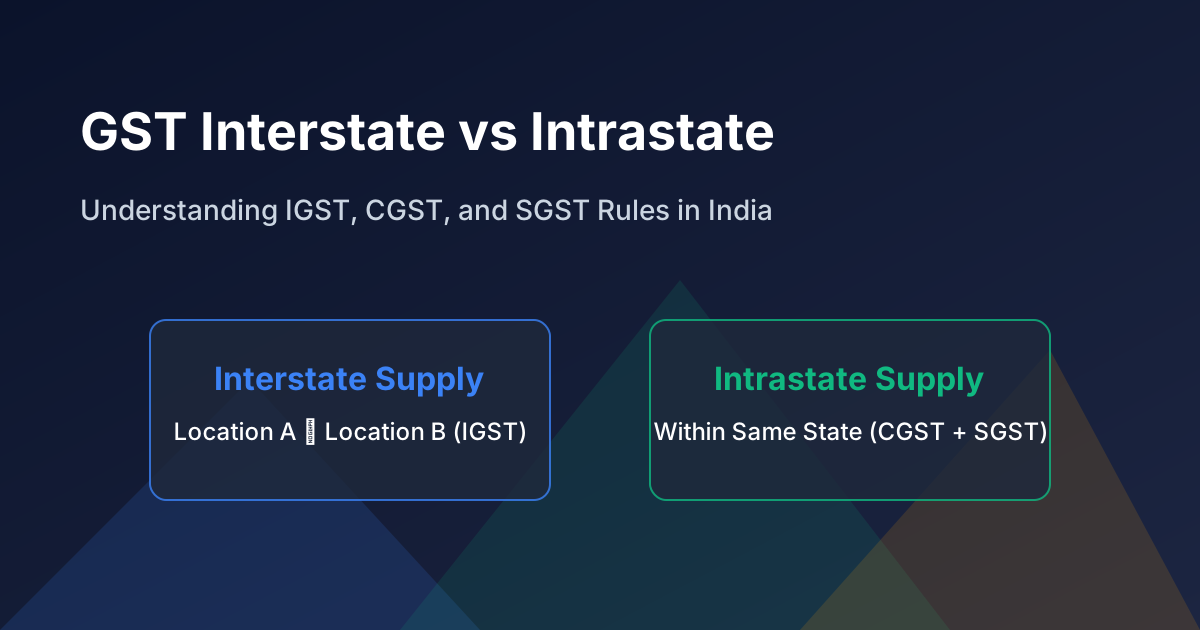
- Interstate Supply = Supplier and Place of Supply are located in different states or union territories → IGST applies.
- Intrastate Supply = Supplier and Place of Supply are located in the same state or union territory → CGST and SGST apply.
Correct classification ensures accurate GST invoicing, return filing, and tax payment.
Why Interstate and Intrastate Classification Matters
Many businesses assume GST simply depends on where the customer is located. However, GST law primarily considers the Supplier Location and the Place of Supply.
Correct classification affects:
- Type of GST charged
- Invoice preparation
- GST return reporting
- Tax payment obligations
- Input Tax Credit eligibility
- Compliance accuracy
Incorrect classification can create unnecessary disputes and compliance risks.
What is Interstate Supply?
An interstate supply occurs when the supplier and the Place of Supply are located in different states or union territories.
Such transactions generally attract Integrated Goods and Services Tax (IGST).
Example
Supplier Location:
- Maharashtra
Place of Supply:
- Karnataka
Tax Applicable:
- IGST
Since the supplier and place of supply are located in different states, the transaction is classified as an interstate supply.
What is Intrastate Supply?
An intrastate supply occurs when the supplier and the Place of Supply are located within the same state or union territory.
Such transactions generally attract:
- Central Goods and Services Tax (CGST)
- State Goods and Services Tax (SGST)
Example
Supplier Location:
- Karnataka
Place of Supply:
- Karnataka
Taxes Applicable:
- CGST + SGST
Because both locations are within the same state, the transaction is classified as an intrastate supply.
How GST Determines Interstate and Intrastate Supplies
GST classification is based on two critical factors:
Supplier Location
The state where the supplier is registered under GST.
Place of Supply
The location where goods or services are deemed to be supplied under GST law.
The relationship between these two locations determines whether a transaction is interstate or intrastate.
| Supplier Location | Place of Supply | Classification |
|---|---|---|
| Same State | Same State | Intrastate Supply |
| Different States | Different State | Interstate Supply |
Place of Supply Rules Explained
Place of Supply rules are among the most important provisions under GST.
For Goods
The Place of Supply is generally the location where goods are delivered.
Example:
- Supplier: Delhi
- Goods Delivered To: Tamil Nadu
Place of Supply:
- Tamil Nadu
Result:
- Interstate Supply
- IGST Applicable
For Services
The Place of Supply often depends on:
- Recipient location
- Nature of service
- Service-specific GST provisions
Example:
- Consultant: Hyderabad
- Client: Bengaluru
Place of Supply:
- Karnataka
Result:
- Interstate Supply
- IGST Applicable
Taxes Applicable Under GST
Integrated Goods and Services Tax (IGST)
IGST applies to interstate transactions.
Key Features:
- Collected by the Central Government
- Applicable to interstate supplies
- Facilitates seamless tax credit flow
- Simplifies interstate trade
Central Goods and Services Tax (CGST)
CGST applies to intrastate transactions and is collected by the Central Government.
State Goods and Services Tax (SGST)
SGST applies alongside CGST and is collected by the respective State Government.
Interstate vs Intrastate Supply Comparison
| Particulars | Interstate Supply | Intrastate Supply |
|---|---|---|
| Supplier & Place of Supply | Different States | Same State |
| GST Charged | IGST | CGST + SGST |
| Tax Collection | Central Government | Central + State Government |
| Return Reporting | Interstate Transactions | Intrastate Transactions |
| Common Example | Maharashtra to Gujarat | Karnataka to Karnataka |
| ITC Flow | Through IGST Credit | Through CGST and SGST Credits |
Interstate Supply Examples
Example 1: Sale of Goods
Supplier:
- Delhi
Customer:
- Tamil Nadu
Applicable Tax:
- IGST
Example 2: Software Development Services
Service Provider:
- Telangana
Client:
- Kerala
Applicable Tax:
- IGST
Example 3: Freelance Consulting
Freelancer:
- Maharashtra
Client:
- Delhi
Applicable Tax:
- IGST
Example 4: E-Commerce Transaction
Seller:
- Rajasthan
Customer:
- West Bengal
Applicable Tax:
- IGST
Intrastate Supply Examples
Example 1: Retail Store Sale
Supplier:
- Karnataka
Customer:
- Karnataka
Applicable Tax:
- CGST + SGST
Example 2: Local Consultant
Consultant:
- Andhra Pradesh
Client:
- Andhra Pradesh
Applicable Tax:
- CGST + SGST
Example 3: Manufacturing Supply
Manufacturer:
- Gujarat
Distributor:
- Gujarat
Applicable Tax:
- CGST + SGST
Example 4: Restaurant Services
Restaurant:
- Hyderabad
Customer:
- Hyderabad
Applicable Tax:
- CGST + SGST
GST Calculation Examples
Understanding GST calculations helps businesses invoice correctly.
Interstate Supply Calculation
Product Value:
₹10,000
GST Rate:
18%
IGST:
₹10,000 × 18% = ₹1,800
Invoice Total:
₹11,800
Intrastate Supply Calculation
Product Value:
₹10,000
GST Rate:
18%
CGST:
₹10,000 × 9% = ₹900
SGST:
₹10,000 × 9% = ₹900
Total GST:
₹1,800
Invoice Total:
₹11,800
Although the total tax remains the same, the tax components differ.
Impact on Input Tax Credit (ITC)
Correct GST classification is critical for claiming Input Tax Credit.
For Interstate Transactions
Businesses receive IGST credit.
This credit can generally be utilized against:
- IGST liability
- CGST liability
- SGST liability (subject to GST utilization rules)
For Intrastate Transactions
Businesses receive:
- CGST Credit
- SGST Credit
Proper classification helps maintain smooth credit utilization and compliance.
Common Mistakes Businesses Make
Incorrect Place of Supply Determination
Many businesses fail to identify the correct Place of Supply.
This often results in incorrect GST charging.
Charging Wrong GST Type
Applying CGST and SGST instead of IGST—or vice versa—can lead to compliance complications.
Incorrect Customer Information
Missing customer GST details and state information often cause invoicing errors.
Ignoring Service-Specific Rules
Certain services have unique Place of Supply provisions that businesses must understand.
GST Return Reporting Errors
Incorrect reporting may trigger notices and reconciliation mismatches.
Best Practices for Businesses
To improve GST compliance:
- Verify customer state details before invoicing.
- Determine Place of Supply accurately.
- Review GST calculations before issuing invoices.
- Maintain proper documentation.
- Reconcile GST returns regularly.
- Use GST-compliant accounting software.
- Train finance teams on GST classification rules.
Following these practices reduces compliance risks and improves operational efficiency.
Frequently Asked Questions
What is the difference between interstate and intrastate supply?
Interstate supplies occur between different states, whereas intrastate supplies occur within the same state.
Which tax applies to interstate supplies?
Integrated Goods and Services Tax (IGST) generally applies.
Which taxes apply to intrastate supplies?
Central GST (CGST) and State GST (SGST) generally apply.
Why is Place of Supply important?
Place of Supply determines whether a transaction is interstate or intrastate and therefore determines the applicable GST.
Can incorrect classification create GST issues?
Yes. Incorrect classification can result in penalties, notices, accounting errors, and Input Tax Credit complications.
Are exports treated as interstate supplies?
Yes. Exports are generally treated as interstate supplies under GST provisions.
Are imports subject to IGST?
Yes. Imports generally attract IGST in accordance with GST regulations.
Do services also have interstate and intrastate classification?
Yes. Service transactions are classified based on Place of Supply provisions.
How VSNEXOS GST Tools Can Help
Accurate GST calculations are essential for compliance.
The VSNEXOS GST Calculator helps businesses:
- Calculate GST instantly
- Determine IGST, CGST, and SGST amounts
- Calculate tax-inclusive and tax-exclusive prices
- Generate accurate GST values
- Reduce manual calculation errors
Using automated GST tools improves accuracy and simplifies tax compliance.
Conclusion
Understanding the difference between interstate and intrastate supplies is fundamental for every GST-registered business.
The classification determines whether IGST or CGST and SGST apply, affects return filing obligations, influences Input Tax Credit eligibility, and directly impacts GST compliance.
Businesses should carefully determine the Place of Supply, verify customer information, and maintain accurate documentation before issuing invoices.
A strong understanding of interstate and intrastate supply rules helps businesses avoid penalties, simplify compliance, and ensure smooth GST operations in 2026 and beyond.
About the Author
Vishnu Bandavath is the Founder & CEO of VSNEXOS. He writes about GST compliance, business technology, AI automation, web development, and digital transformation. Through VSNEXOS tools and educational resources, he helps businesses simplify operations, improve compliance, and grow efficiently in the digital economy.
Building enterprise SaaS for Indian businesses from Hyderabad.
LinkedIn